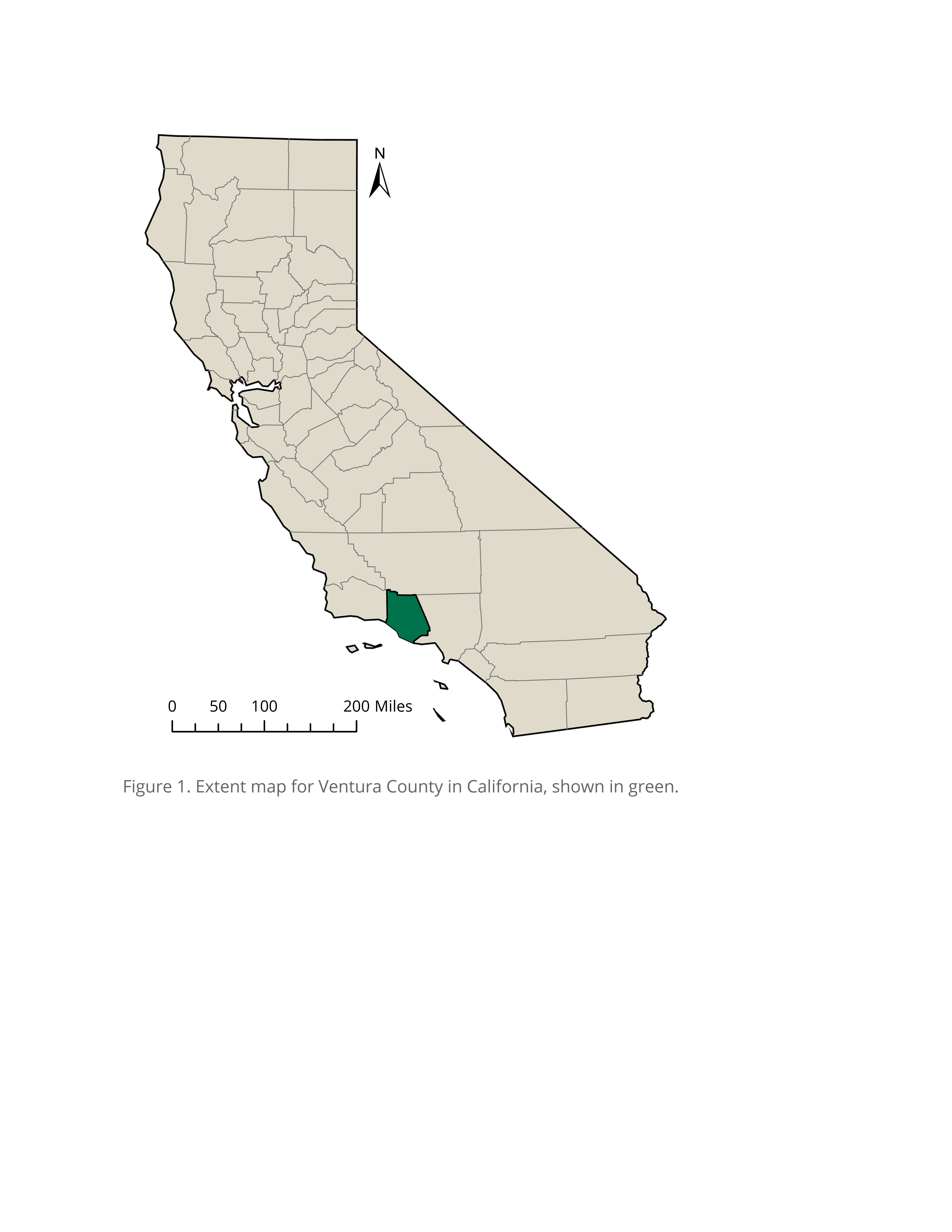
Ventura County Air Quality Monitoring and Analysis: Studying the relationship between O3, PM2.5, and disadvantaged communities (DACs) in Ventura County (VC); specifically through the spatial distribution of air monitoring stations, and asthma induced medical visits for minors.
Ozone and Particulate Matter of a diameter less than or equal to 2.5 microns (PM2.5) are air pollutants that are common subjects of multidisciplinary research. Prior research has examined these parameters in California from the state level to Los Angeles County. This study focuses on the relationship between ozone, PM2.5, and disadvantaged communities (DACs) in Ventura County (VC); specifically through the spatial distribution of air monitoring stations and asthma induced medical visits for minors. Data sourced from PurpleAir, the EPA’s Air Quality System (AQS), CalEnviroScreen 4.0 (CES4.0), and the US Census were tidied and compiled in R. R was used alongside ArcGIS Pro to analyze and visualize data based on census tracts. This study found that within VC, (1) there was a significant difference between ozone levels in SB535 defined DACs and nonDACs, but no significant difference between PM2.5 levels in DACs and nonDACs; (2) PM2.5 and asthma-induced hospitalizations per 10,000 people for ages 5 to 17 had the strongest correlations with an R2 value of 0.9; and (3) the number of and spread of air quality monitors are not well-correlated with SB535 defined DACs (p=0.86, p=0.44, respectively). In mainland VC census tracts (n=172), further research is suggested into the relationship between the local meteorology on the distribution of air pollutants and human health.